Preset products
Clear entry offers with practical outcomes and defined deployment scope.
 bots43
Preset Agents & Workflows
bots43
Preset Agents & Workflows
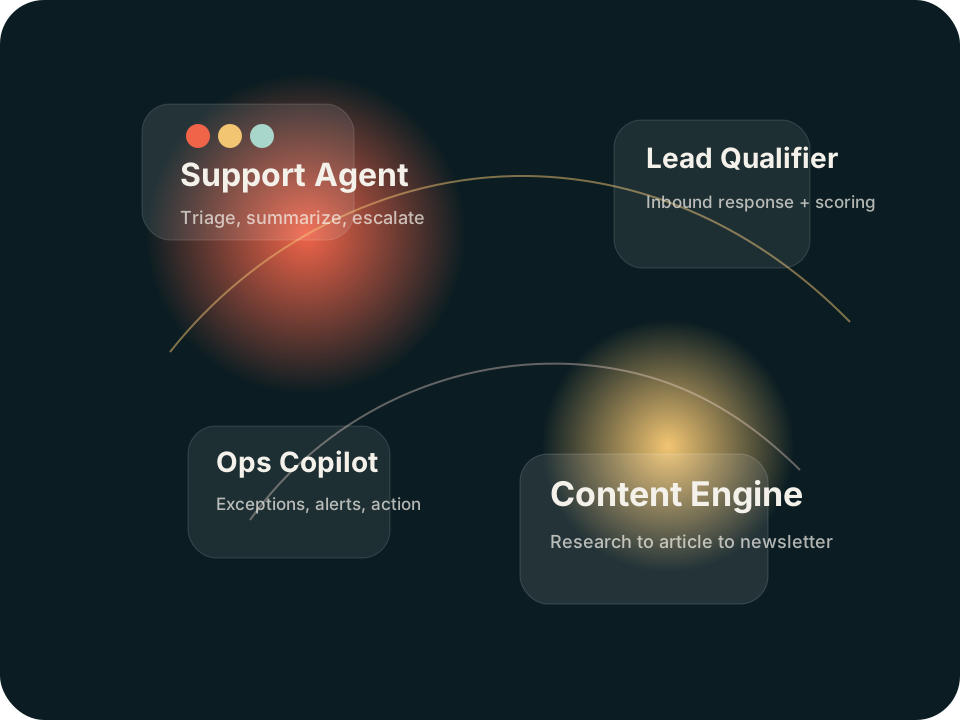
Bots43 packages proven internal systems into sellable products: support agents, lead qualifiers, onboarding workflows, and content operation packs. Start with a preset build, then expand into a deeper custom setup when the business case is already proven.
Support Agent
Lead Qualifier
Onboarding Workflow
 Operator-backed product line
Choose a starting product, deploy fast, then iterate with real usage data.
Preset offer first, custom expansion second. Faster sales, clearer delivery, lower risk.
The public surface is designed to move visitors toward a concrete buying decision: pick a preset agent, choose a workflow pack, or book a scoped upgrade path. Content supports the sale instead of distracting from it.
Clear entry offers with practical outcomes and defined deployment scope.
Repeatable bundles for support, revenue, onboarding, and content operations.
Editorial pages that educate buyers, sharpen positioning, and drive qualified demand.
Answers common questions, triages incoming issues, captures context, and escalates cleanly.
Handles first-response outreach, enrichment, qualification, and booking logic.
Collects inputs, assigns milestones, drafts updates, and keeps onboarding moving.
FAQ handling, intent capture, priority logic, and clean human escalation.
Lead intake, scoring, CRM sync, and calendar routing in one workflow layer.
Turns source material into articles, snippets, and campaign-ready content assets.
The blog supports the storefront by helping buyers compare categories, understand pricing tradeoffs, and decide which preset product should come first.
Read the buying guide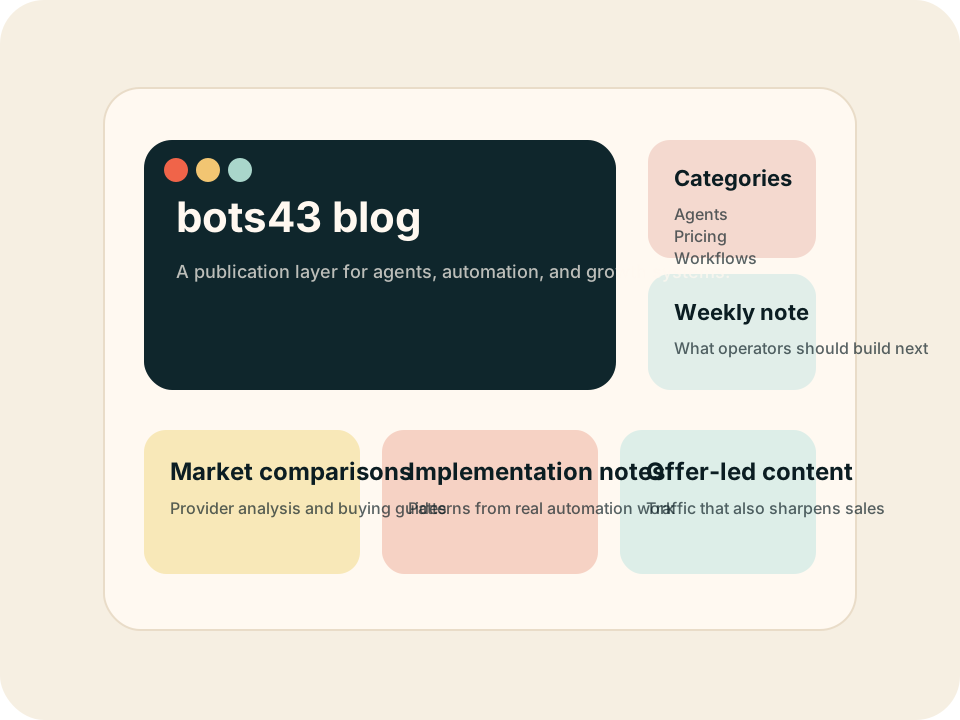
Bots43 keeps the public storefront focused on product offers, while the private operator stack stays internal. That gives you a clean line between what buyers purchase and how delivery is actually orchestrated behind the scenes.